
Delivering the Green Agenda Through Regional Cooperation: A Business Perspective
Žabljak, Montenegro | 18 September 2026
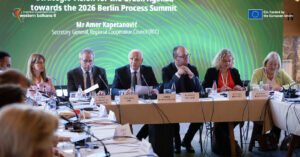
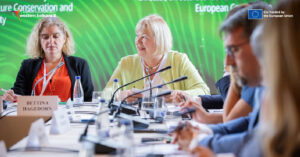
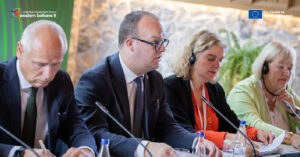
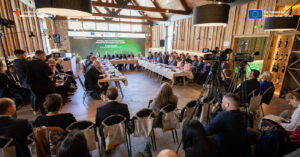
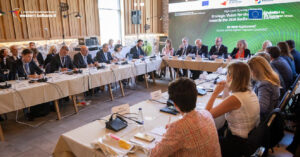
The Third Annual Ministerial Meeting on the Green Agenda for the Western Balkans is taking place on 18–19 September in Žabljak, Montenegro, bringing together representatives of the Western Balkans, European institutions, regional organisations and international partners to discuss progress and priorities for advancing the Green Agenda.
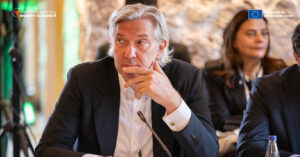
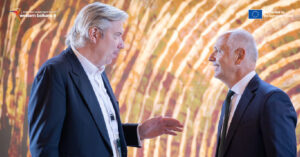
As part of the Strategic Partners’ Session: “Delivering the Green Agenda through Regional Cooperation,” David Piegazki, Secretary General of the Western Balkans Six Chamber Investment Forum (WB6 CIF), is contributing to the discussion from the perspective of the regional business community.
The success of the Green Agenda for the Western Balkans should not be assessed only through the adoption of strategies, declarations and regulatory frameworks. It should also be measured by whether companies, particularly small and medium-sized enterprises, are able to implement new requirements while remaining competitive.
For businesses, this means clear and predictable rules, realistic transition periods, technical support and accessible financing for green investments.
Why Regional Cooperation Matters
This is where the regional dimension becomes particularly important. If the six Western Balkan economies introduce different rules, registers, fees and reporting systems for the same environmental requirements, companies operating across the region could face additional administrative burdens and new non-tariff barriers. Such fragmentation would run against the objectives of regional economic integration.
Extended Producer Responsibility (EPR) is one concrete example. EPR should increasingly become a common standard across the Western Balkans, but its implementation should be coordinated regionally. Companies operating across several markets should not have to deal with significantly different registration, reporting and compliance requirements in each economy.
At the same time, the Green Agenda should not be viewed only as a set of new obligations. It also represents an opportunity to develop a more integrated regional circular economy.
Building a Regional Circular Economy
The Western Balkans needs stronger industrial symbiosis, where waste generated in one part of the region can become a resource for industry elsewhere. WB6 CIF is already working with regional partners to create the conditions for circular material flows across the Western Balkans, including a better understanding of material flows, market potential and the barriers to regional cooperation.
The objective is to identify where regional cooperation can create viable business models, new investment opportunities and greater resource efficiency. This direction is also reflected in the Common Regional Market Action Plan, which supports more harmonised approaches to non-hazardous waste flows and stronger regional cooperation on industrial symbiosis and material flows.
The region should also make better use of treatment and recycling capacities that already exist within its economies. Where suitable capacity exists in one economy, there is a strong case for examining whether certain waste streams could be processed within the Western Balkans rather than transported outside the region. This could reduce costs and unnecessary transport while keeping more economic value within the region.
There are already business models demonstrating the potential of circularity. In Albania, for example, a micro family company uses discarded glass packaging and transforms it into glass fibres used in the production of swimming pools and insulation materials. The regional challenge is to create the conditions for such models to grow and scale across borders.
Green Transition and Business Competitiveness
For Western Balkan companies, the green transition is also increasingly a competitiveness issue. CBAM, new packaging requirements, sustainability requirements from European buyers and the decarbonisation of supply chains increasingly affect their ability to remain integrated into European value chains.
This makes practical implementation and regional coordination increasingly important. Businesses need to be able to understand and respond to new requirements while operating in a regional market that supports, rather than complicates, their efforts to transition.
This is why the business community needs to be involved from the earliest stages of policy development.
Bringing the Business Voice into Policy Development
WB6 CIF can provide a structured bridge between policymakers and the regional business community. Through its six chambers, thematic work and consultations with companies, it can bring practical business evidence into the policy process, identify implementation barriers and help develop solutions that work across the region.
Regional cooperation can help ensure that common environmental objectives are translated into approaches that are practical for businesses, while also creating opportunities for investment, innovation and greater resource efficiency.
The objective should be clear: a green transition that brings the Western Balkans closer together, strengthens the competitiveness of its companies and creates new regional economic opportunities, rather than six separate transitions that create new barriers between them.